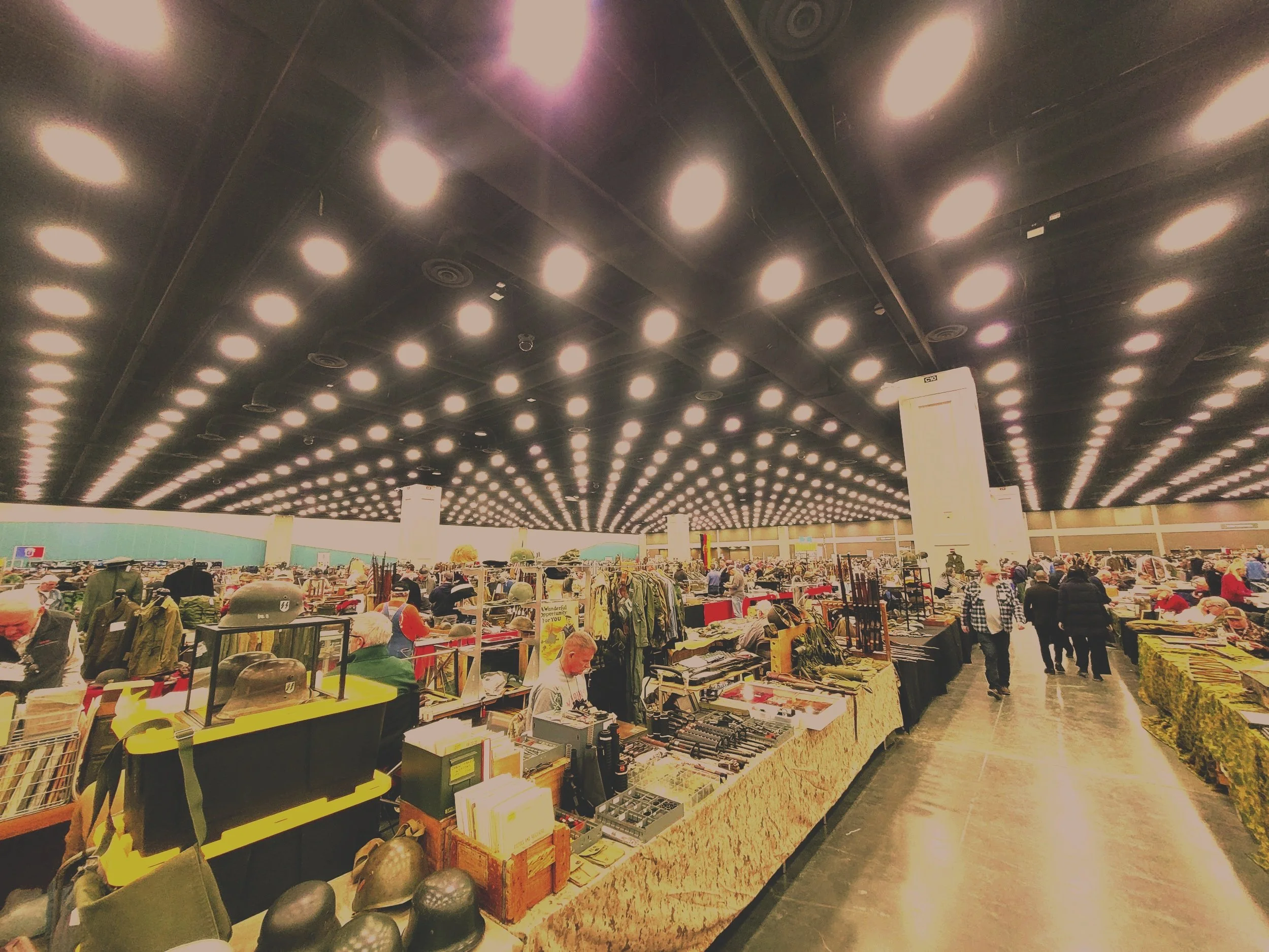
Condensing Experience into Reproducible Data: Transparent Valuations in a Subjective Domain
How I collected real dealer data, applied consistent manual grading, ran multi-factor price sensitivity analyses, and built clear visual presentations to quantify what drives value. Turning my experience into reproducible metrics.
GoalsThe world of militaria and antiques has long relied on the accumulated judgment of experienced dealers and collectors. That expertise, developed through years of handling objects, recognizing subtle variations in condition, and understanding market nuance, remains invaluable. Yet it has historically been difficult to transfer, verify, or apply consistently at scale.
❋ Much easier to access the militaria marketBy extracting structured data points from titles, descriptions, and photos across hundreds of real listings, clear benchmarks and visual charts can be created. This gives collectors reliable pricing context without requiring personal connections or years of hands on experience. The consistent data processing and presentation lower the barrier so more collectors and dealers can participate confidently.
❋ Understanding a piece of historyIn the German helmet case study, data points such as shell size, model, branch, and condition reveal production patterns and historical context that are often hidden in subjective product descriptions. The resulting charts and visuals help collectors see not just the price but the story behind each artifact.
❋ Know how much to sell and/or to buyTransparent private-party estimates and typical dealer ranges, broken down by data points such as shell size and model, provide concrete numbers for decision-making. Analyzing each variable shows how important each feature is in relation to value. This turns buying and selling into informed choices rather than guesswork.
❋ Understand and demystify collectiblesEvery step from data collection through manual grading and statistical modeling is documented with visible methodology and supporting visuals. This turns what used to feel like insider knowledge into something clear, auditable, and repeatable so collectors can build their own understanding over time.
Much easier to access the militaria market
This data shows you years of experience broken down into one chart. What matters when it comes to these helmets?
Does helmet size affect value?
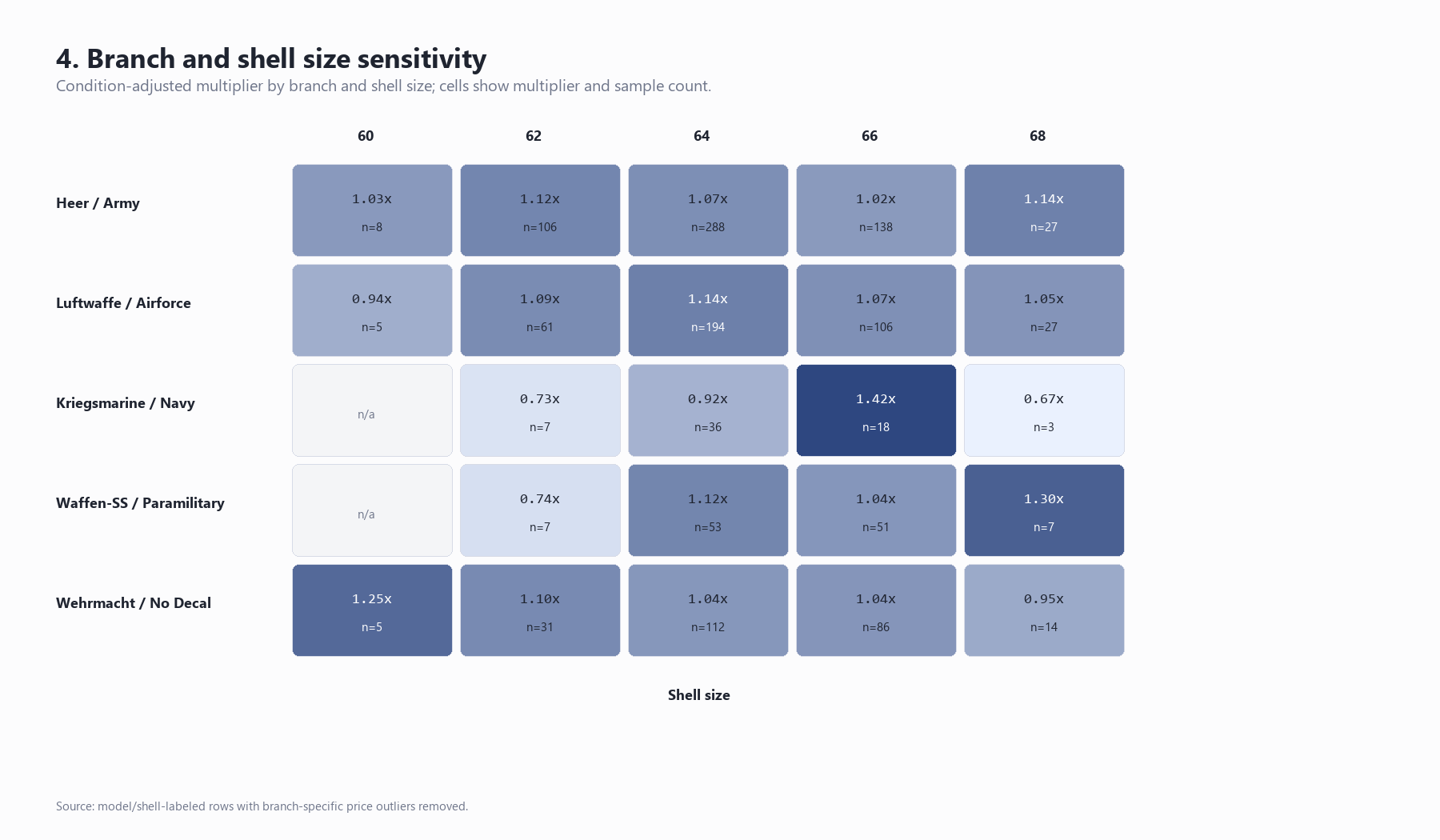
Not significantly, at least based on this dataset. The chart compares shell sizes from 60 to 68, with darker colors representing higher prices. The “n” value shows how many samples are included in each category, so lower counts should be interpreted with more caution. Across 1,000+ data points, there does not appear to be a strong relationship between shell size and price.
How does condition affect value?
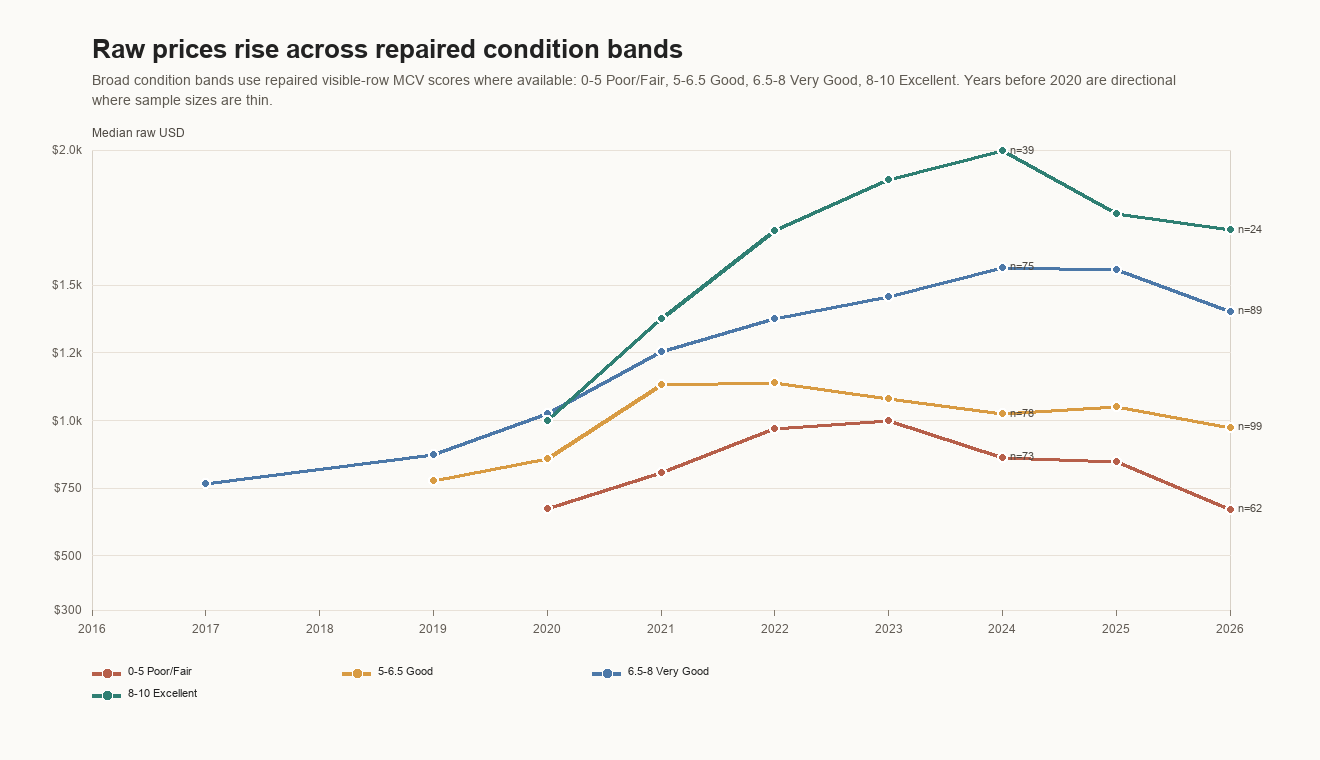
Condition has a major impact on value, but the market’s tolerance for condition changes over time. In some periods, collectors are more accepting of worn examples. In others, cleaner examples command much stronger premiums.
Have helmet prices appreciated over time?
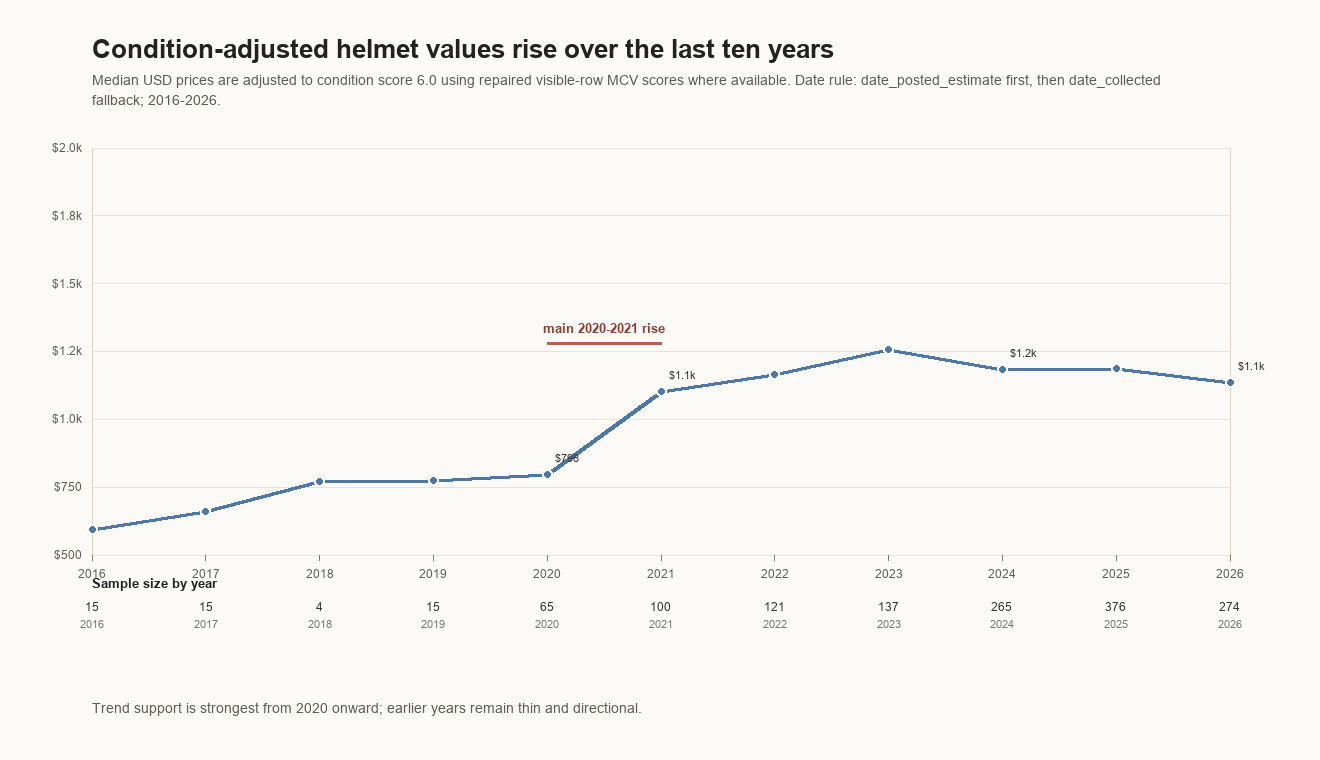
This chart shows the direction helmet prices have moved since 2016. There is a clear jump from 2020 to 2021, likely related to the Covid-era collecting boom. In the past few years, prices have been flatter than expected. Across branches, the data suggests an overall increase of about 1% per year, which is reflected in the case studies on Milivault.
Estimate What to Buy or Sell For
How can this data help price a helmet?
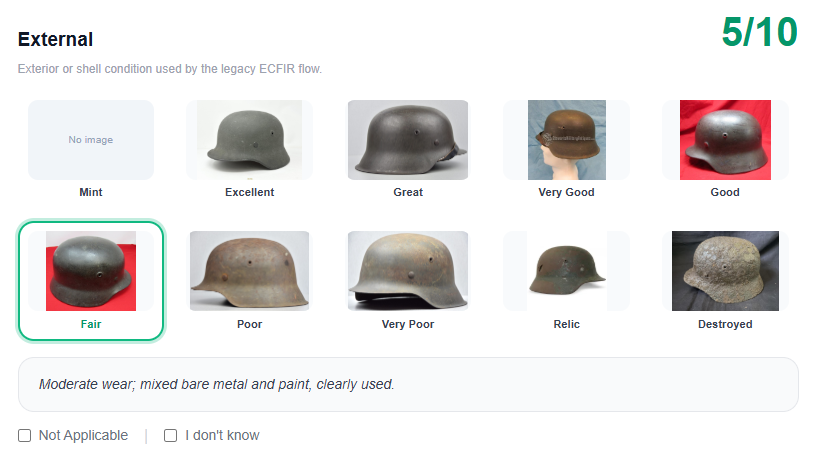
What is the exterior condition?
Select the sample that most closely matches your helmet.
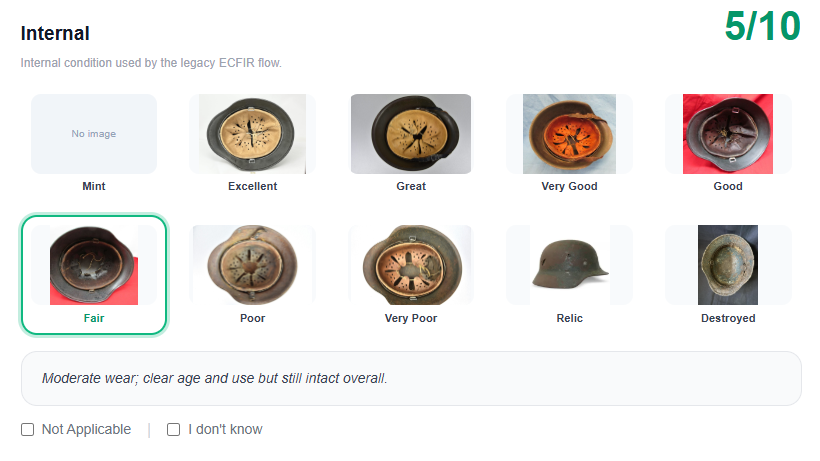
What is the interior condition?
Select the closest matching interior condition.
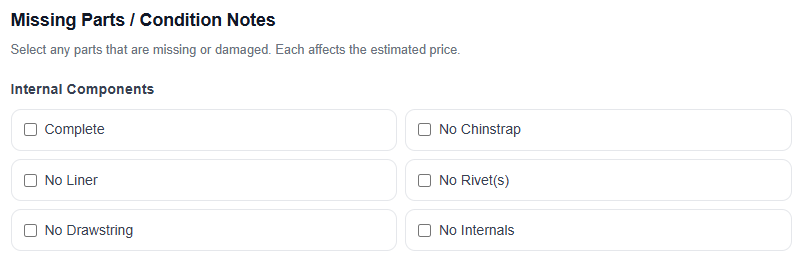
Are any components missing?
Account for missing liner, chinstrap, drawstring, rivets, or other components.
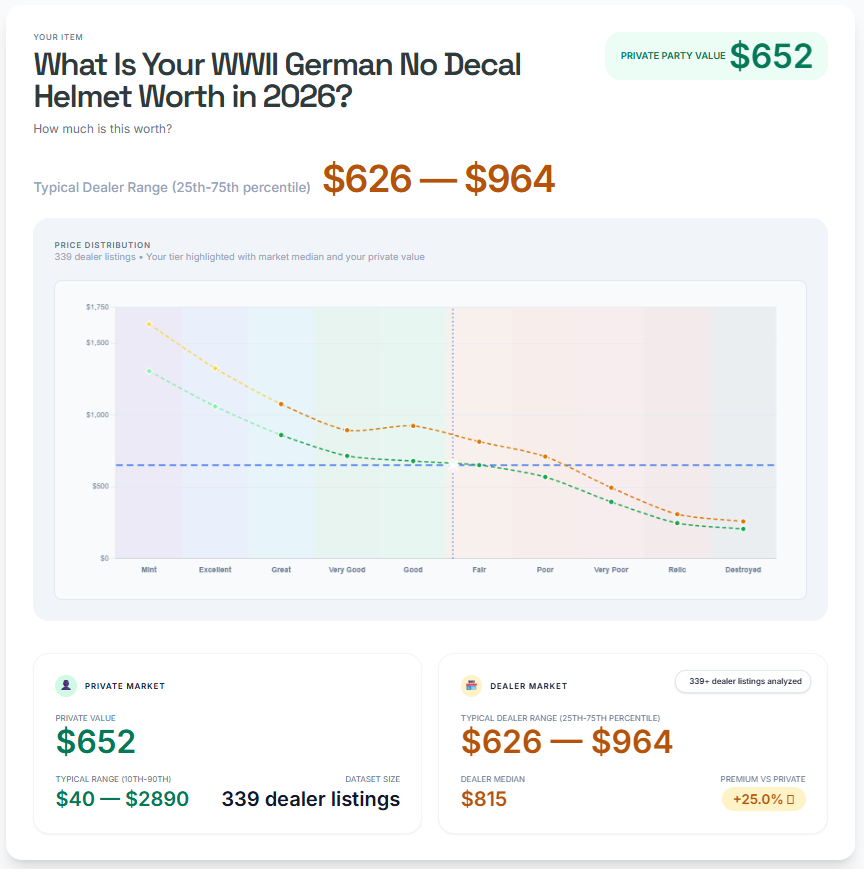
Estimated Value
In three steps, the tool produces a data-supported estimate based on comparable examples. This gives collectors a clearer starting point without requiring years of experience or hours spent searching for similar items.
Understanding a piece of history
Many collectors are drawn to these artifacts because of the history behind them. Data can reveal more than market value; it can also highlight patterns in production, usage, and historical context.
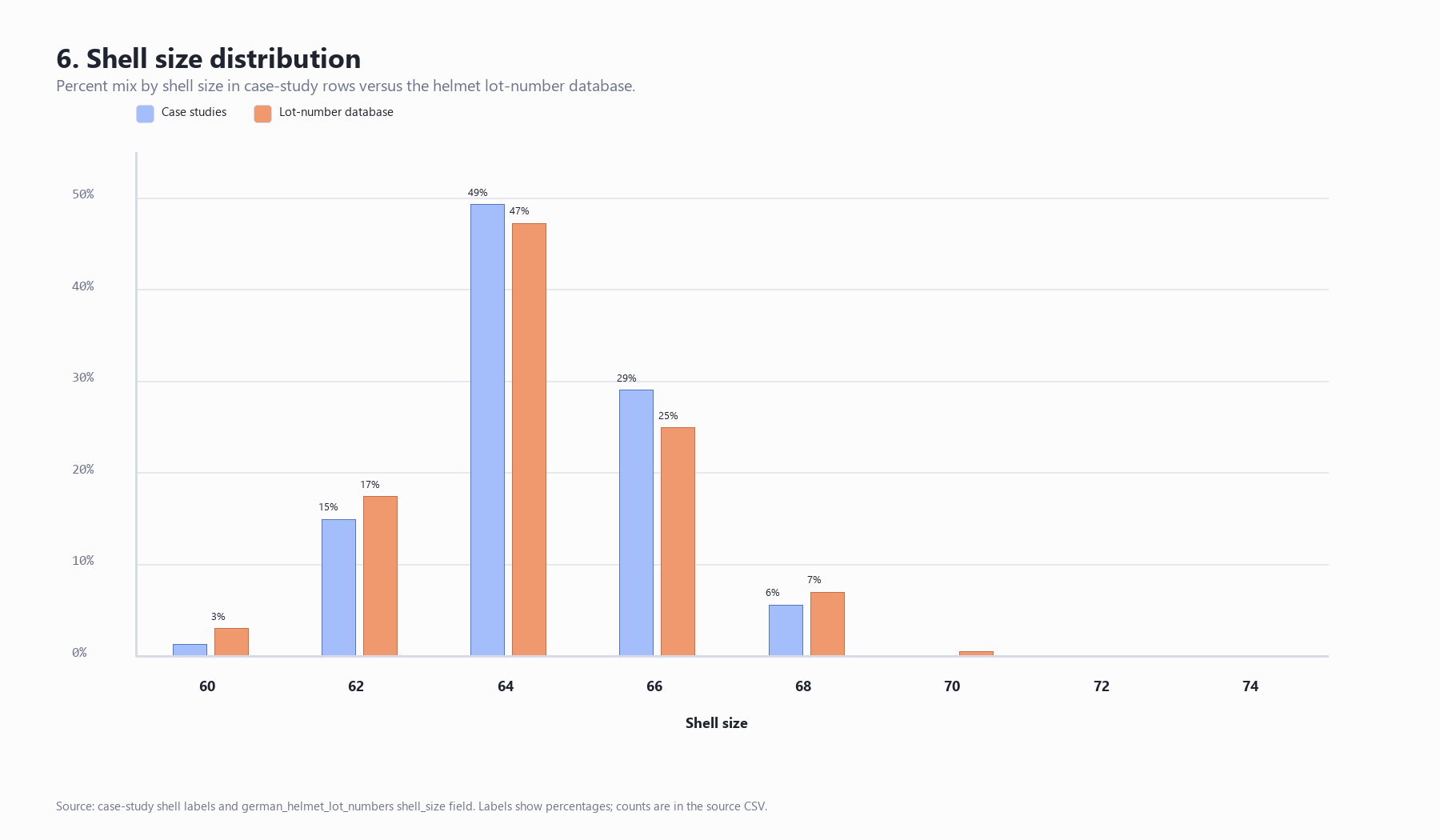
What was the most common helmet shell size?
The chart compares helmet shell sizes from my labeled dataset with Brian Ice’s German helmet lot number database. Both datasets show the same general pattern: size 64 appears most often. This corresponds roughly to a size 57 liner, or 7 1/8 in U.S. hat sizing, which remains a common head size today.
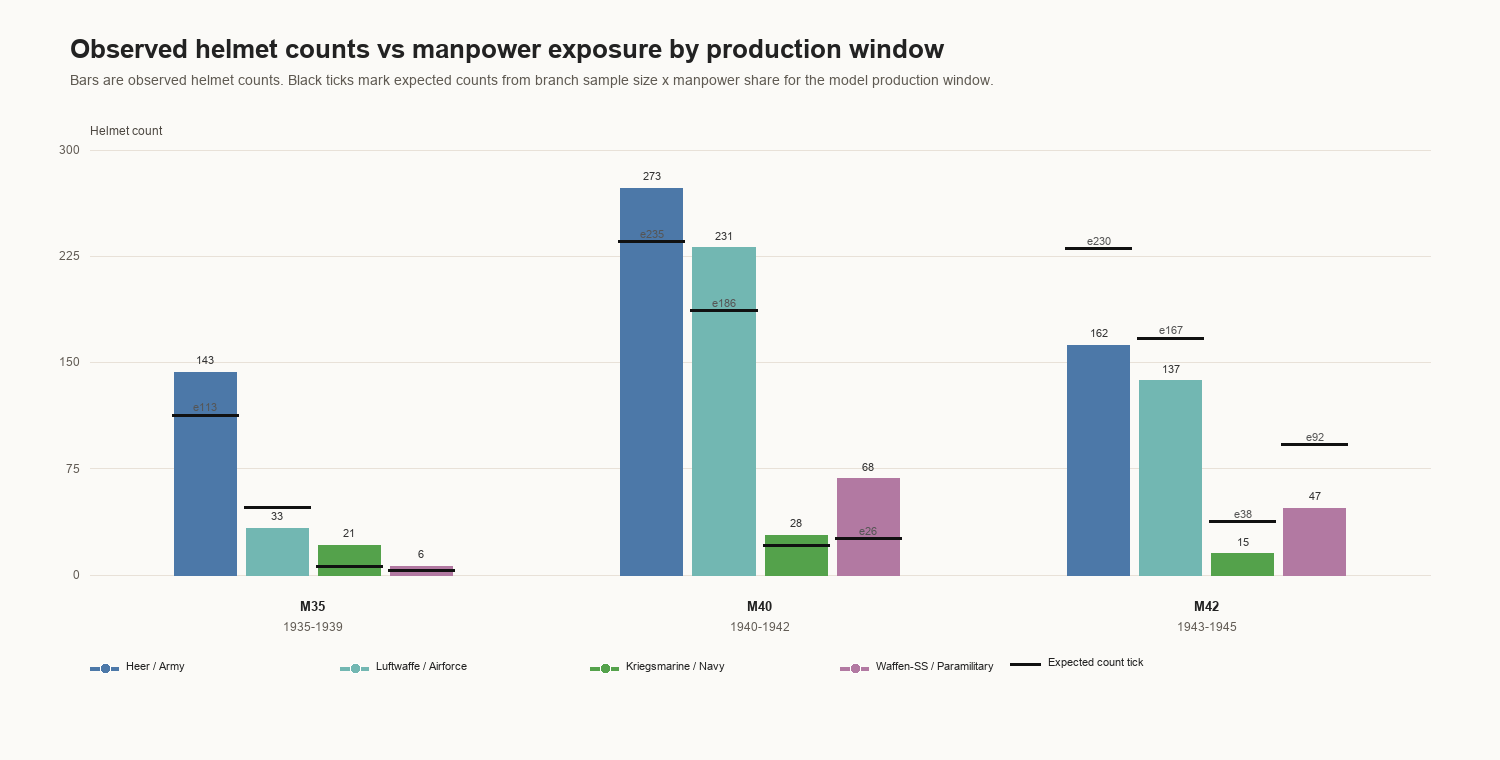
Do helmet models reflect wartime production patterns?
Surprisingly, the data appears somewhat consistent with broader wartime production patterns. This should not be treated as proof, since many factors affect which helmets survive and appear on the market today, but it is an interesting pattern worth exploring.
History is Why We Do it!
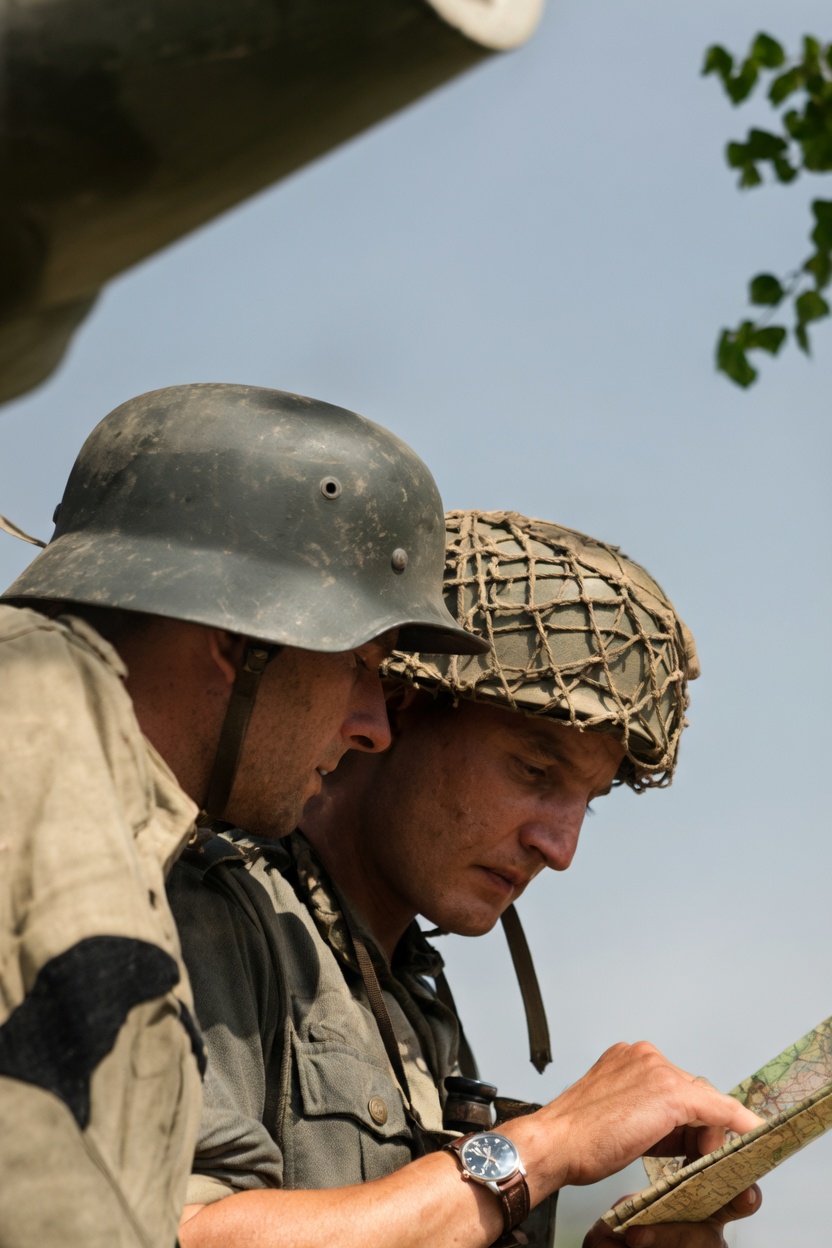
At the end of the day, the history is why many of us collect. Prices, rarity, and condition matter, but the real appeal is understanding the people, events, and stories connected to these objects. The data helps us understand the market, but the history is what makes the artifacts worth studying in the first place.
Beyond Helmet Valuations
While this project focuses on WWII German helmets, the underlying idea is much broader.
Every militaria business accumulates decades of knowledge through buying collections, pricing inventory, interacting with customers, and tracking market trends. The challenge is that much of this expertise exists only in the heads of experienced dealers and collectors.
The goal of Milivault is to help turn that experience into something measurable, repeatable, and easier to share.
The same methods used here can be applied to:
Market trend analysis
Inventory pricing support
Collection management
Cataloging and classification
Customer education and content development
Historical and collector research
Rather than replacing expertise, the objective is to amplify it. By combining collector knowledge with structured data, businesses can make more informed decisions, educate customers more effectively, and preserve valuable institutional knowledge for future generations of collectors.
At its core, this project is not about helmets. It is about taking years of collector and dealer experience and turning that knowledge into tools that help people research, manage, value, and communicate the significance of historical artifacts. The same principles can be applied across countless collecting fields wherever expertise, data, and history intersect.